
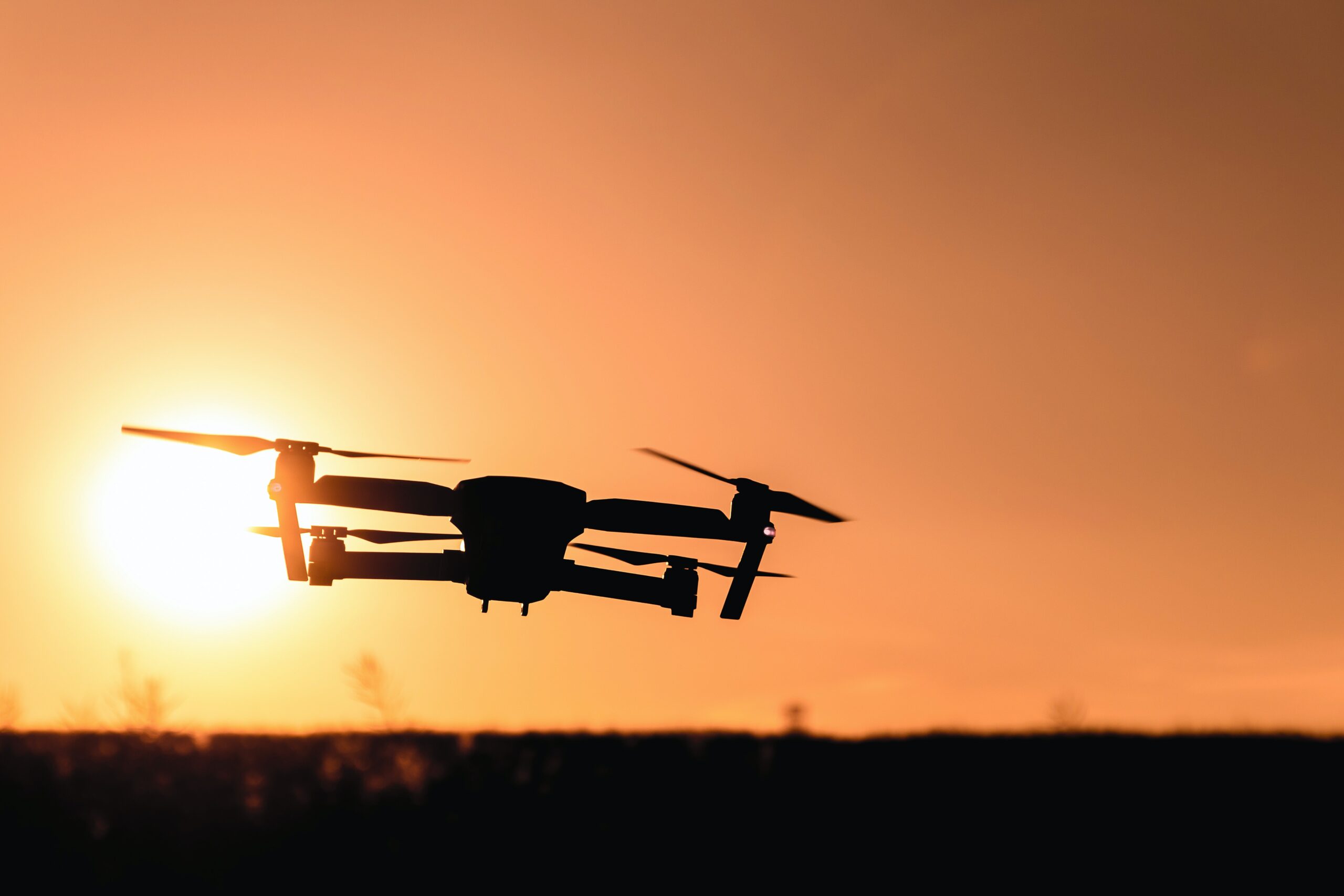
In less than a decade, drones, also known as Unmanned Aerial Vehicles (UAVs), have transitioned from military gimmicks to indispensable business tools. The drone industry, which was valued at $14.1 billion just a few years ago, is now expected to soar to a staggering $43 billion by 2024. That’s a three-fold increase! This astronomical growth underscores drones’ transformative impact on the business landscape. Today, let’s explore ten ingenious ways businesses are leveraging drones.
Elevating Photography to New Heights
The first wave of drone adoption was led by photographers, who quickly recognised the potential of these flying cameras. Drones have revolutionised photography, offering unprecedented angles and perspectives. They’ve democratised aerial photography, making it accessible to everyone, from wedding photographers to real estate agents. Drones have truly expanded the creative boundaries of visual storytelling.
Lights, Camera, Action: Drones in Entertainment
The entertainment industry was quick to harness the potential of drones. These high-flying gadgets film from every angle, offering stability superior to handheld cameras or even tracks. They’re small, portable, and significantly cheaper than traditional filming equipment. From shooting adrenaline-charged sporting events to capturing immersive footage for blockbuster movies, drones are redefining the entertainment industry.
Green Revolution: Drones in Agriculture
Farmers are leveraging drones in a multitude of ways. Drones equipped with advanced sensors can monitor vast fields, identifying failing crops and areas needing attention. They’re instrumental in mapping farm boundaries, studying irrigation systems, and even applying pesticides. Drones are ushering in a new era of precision agriculture by improving efficiency and crop yields.
Building the Future: Drones in Construction
Drones are transforming the construction industry. They provide bird’s-eye footage of construction sites, enabling contractors to accurately measure and report on structures. Drones can conduct inspections of bridges and other hard-to-reach structures, enhancing safety while saving time. They’re revolutionising how architects and construction workers plan, execute, and monitor projects.
Selling Dreams: Drones in Real Estate
Nearly half of all homebuyers begin their search online, expecting to find high-quality photos, videos, and 3D tours of properties. Drones deliver just that. They capture stunning images and videos of homes, showcasing properties like never before. Real estate agents are finding that properties with drone footage sell faster, as potential buyers get a comprehensive view of the property and its surroundings.
Risk Assessment: Drones in Insurance
Insurance companies are among the early adopters of drones. They use these flying devices to assess damages, evaluate risks, and expedite claims processing. Drones can fly around a property, collecting valuable data on damages and potential weak spots. This information helps insurers estimate coverage costs and process claims more efficiently.
Counting the Beans: Drones in Warehousing and Inventory
Drones are making significant inroads into the warehousing and inventory sector. Companies are deploying drones to automate the process rather than relying on manual labour for inventory management. Drones can quickly scan and flag missing items, saving companies time and money while improving accuracy.
The Future of Delivery
Several prominent companies, including Amazon, Google Wing, and UPS, are exploring using drones for delivery. The idea is to use drones to transport customer orders, replacing traditional delivery methods. While there are regulatory hurdles to overcome, drone delivery is a promising prospect for the future, promising faster delivery times and significant savings.
Exploring the Unexplored: Drones in Engineering
Engineers are using drones to explore new sources of raw materials and inspect hazardous areas. Drones can access areas that are unsafe for humans, eliminating risk and improving efficiency. They’re being used to inspect oil wells, analyse transmission lines, and perform other critical tasks, keeping humans safe while improving operational efficiency.
Forecasting the Future: Drones in Weather Prediction
Meteorologists are using drones to gather data from the lower atmosphere, helping predict weather patterns more accurately. This could lead to more precise tornado warnings, potentially saving lives and property.
Conclusion: The Sky’s the Limit
The business applications of drones are broad and diverse, spanning industries from agriculture to insurance. As regulatory frameworks evolve and drone technology continues to advance, the scope for drone usage in business is only set to grow. The sky, it seems, is the limit!